
Making the Hong Kong GigaPan image

Blognosticator Head

I shipped my GigaPan rig and my Really Right Stuff carbon fiber tripod in my checked luggage to Hong Kong. My hope was that I could make a couple of beautiful panoramic images of the Victoria Harbor with Hong Kong in the background. Since I was staying at the Kowloon Hotel, which is just three blocks from the ferry boat landing, I could get there on foot without difficulty.

I have seen several panoramic photos from the top of the tram, looking down on Hong Kong, but that view didn’t interest me. Instead, I wanted to make mine a water level image of the amazing cityscape that faces Kowloon.
Hong Kong map

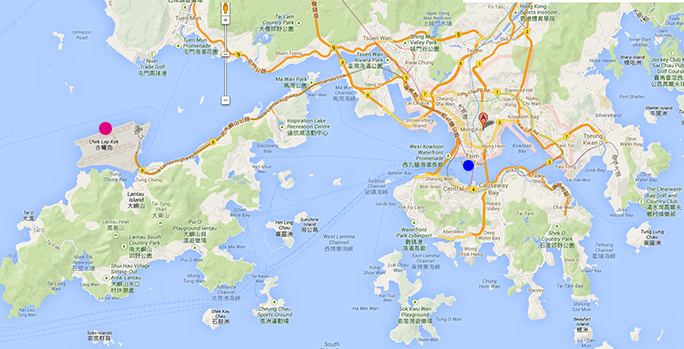
This is a Google map of the Hong Kong area. The blue dot is the location of my camera for the panorama; the red dot is the airport.

The geography: Hong Kong proper is called Hong Kong Central, and it sits on Hong Kong Island. Separating that island from the mainland is a strait called the Victoria Strait, which runs approximately east-west. On the north side of that strait sits the area called Kowloon. The entire region is called Hong Kong, and that area runs north to the mainland Chinese border along the Shenzhen River. Hong Kong was reunited with China in 1997 after 155 years as a British colony. China allows Hong Kong to run as an autonomous region, with its own government, laws, trade relations, and policies.
Hong Kong daytime

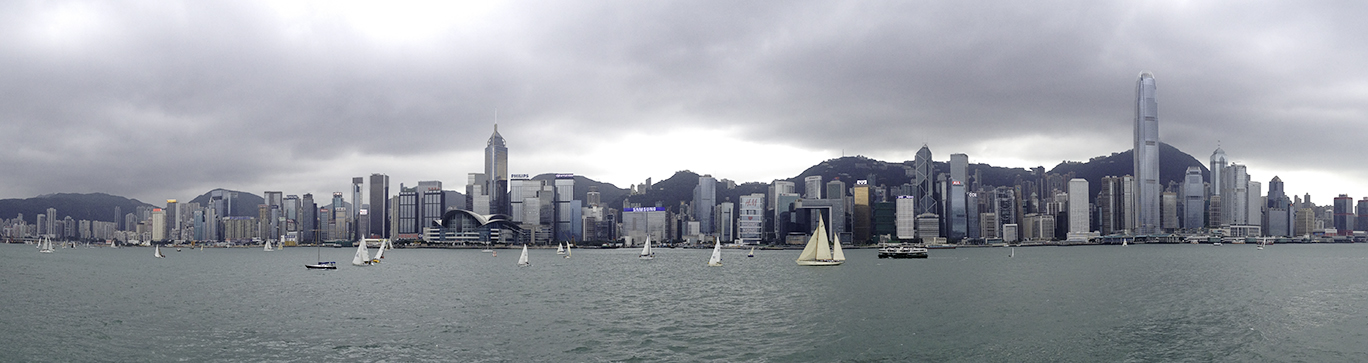
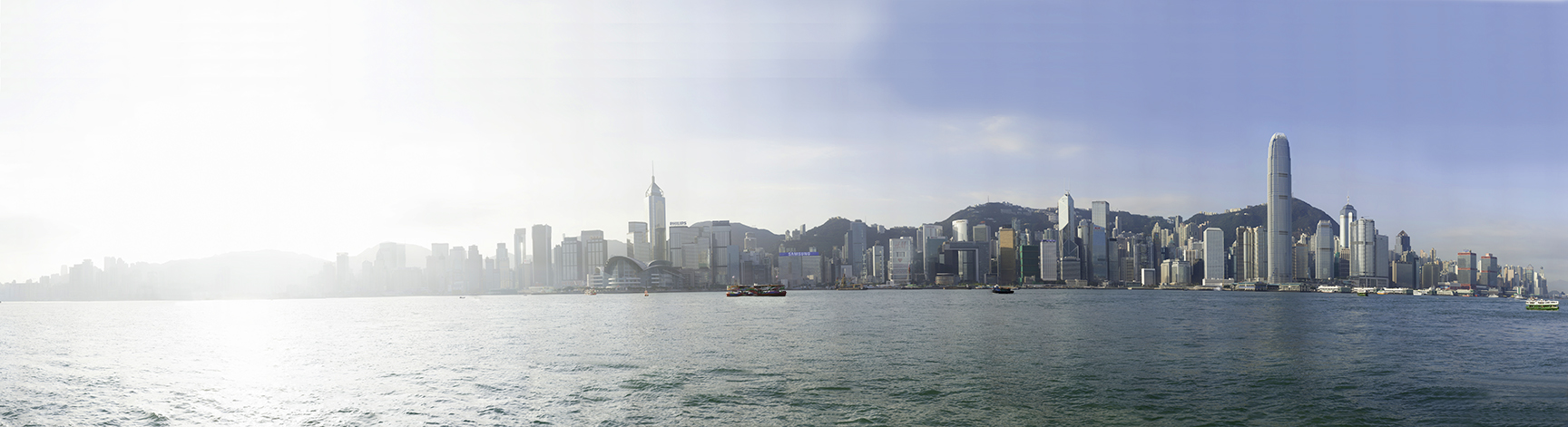
My sunrise photo of Hong Kong Central from the waterfront park in Kowloon. The early morning sun was my worst enemy, but the photo is still interesting. Had I waited an hour or two I could have a better photo, and I would have missed my flight to San Francisco. Click on the photo to go to GigaPan.com to see the high-resolution version.

Even though Hong Kong is part of China, citizens of China cannot travel to Hong Kong without a permit, and visitors, like me, need a visa from China to travel from Hong Kong into mainland China. Americans do not need a visa to travel to Hong Kong.

When you look at Hong Kong in Google Earth you will see that it is an area of dense metropolitan areas surrounded by open spaces, parks and farm land. Just across the river to the north is Shenzhen, an industrial colossus with 10.3 million inhabitants. Shenzhen is the manufacturing hub of southern China, and it’s where goods for export are made, and it hosts one of the busiest container cargo ports in the world. From the satellite view, the world turns from green to concrete on the north side of the Shenzhen River.

Hong Kong Central is one of the densest metropolitan areas in the world. The number of skyscrapers in its very small space is amazing. And, from across the strait, its skyline makes for dramatic photos.

The beginning of the week was marked by cloudy skies, though I did manage to shoot a “regular” panoramic photo (with just 12 frames) with my Canon camera. After the first day, though, we got rain and dense clouds as a result of the typhoon that struck the Philippines. Though I kept going out to the harbor to look, it was almost always unpleasant weather. And, my daytime activities kept me away from photography, so I didn’t get any chances to shoot during the days.

On the night we returned from mainland China, I picked up my suit (described in an earlier blog) from Khan the Tailor, then returned to my hotel, and joined my colleagues for dinner. Then, after dinner, I set up the GigaPan and tripod, grabbed my camera case, and hiked over to the lovely waterfront park that sits at the base of the Kowloon district. The night was perfectly clear, so I shot a 363-frame GigaPan photo of Hong Kong, ending at midnight. Then I went back to the hotel and started packing.

I planned a daytime GigaPan for morning, but I had very little time in which to get this done. I had to be at the airport by about 10:30 to check in for my flight two hours later. Getting to the airport in Hong Kong is a breeze, though. The city’s high speed train whisks you from Kowloon to the terminal in just 23 minutes, and it runs at 12 minute intervals, precisely. From the hotel to the train station was also easy, as there are free shuttle buses to get you there in minutes.

I worked out a schedule that allowed me just over 30 minutes to take the GigaPan photo. It would be shortly after sunrise, so the sun would be in the photo, but I had no choice. I had to do it. I wolfled down my breakfast, dashed up to my room, grabbed the camera gear and headed back to the exact spot on the harbor park to take my morning photo. The sky was blue, the sun bright on the eastern end of Hong Kong Central, and the light on the western end was lovely. I set up an almost identical photo, in the same spot as the one I had done seven hours earlier.

363 frames takes about 35 minutes, so I started the GigaPan and my camera to capture the morning. The harbor was bustling with water taxis, ferry boats, fishing boats, and the occasional barge. I paused the GigaPan device twice to allow a large ship to transit my view. And I wanted to capture at least one of Hong Kong’s famous Star Ferries. These are the charming double-ended boats that carry people across the strait between Kowloon and Central many times every day.

Making GigaPan images with moving water can be challenging. There I was, standing just feet from the water, and with water taking about one-third of my total image, I forged ahead, figuring that I could fix it in Photoshop after stitching, and that I did. It was surprisingly easy. I had to remove one small fishing boat that got caught between two frames and became a blur. Otherwise the photo turned out well.

I find that all of my GigaPan images need some hand work to perfect them. The problems caused by making rows of photos horizontally, over a period of a half-hour, create some curious image defects. Light changes, shadows change, surfaces change their character over that half-hour, and it’s usually necessary to clone a bit here, and touch-up a bit there. This photo has minimal retouching.

I also find that adding some saturation to my GigaPan images makes them look better. That, and a small increase in contrast added with a Curve adjustment layer make these images more attractive. I did both to the Hong Kong photo.

I got my photos taken, I rushed back to the hotel, repacked the GigaPan and tripod (wrapped in bubble-pack), and headed to the airport. From the door of my hotel to the boarding area at the airport took me just one hour and five minutes. As I sat in the terminal area waiting, I was wishing I had spent a little longer taking the photo, or perhaps having another swig of orange juice at breakfast. I had time left over, and that always leaves me wondering what I could have accomplished.

After an almost 11-hour flight back to San Francisco, and an unfortunately long layover there, I made it home with all of my gear intact. I transferred the images to my computer, started GigaPan Stitch working on the images, and went to bed. Twelve hours later I awoke to see the daytime panoramic image finished, and it was worth the effort.

I’m still working on the nighttime image. I’ll post it in a separate blog if it turns out nicely.

 

Posted in Adventures, Panoramic Photography, Photography, Photoshop techniques | Tagged , , , , , | Leave a comment

Danish designer’s logo makes a nice Chinese ideograph

Blognosticator Head

While participating in the ICC Symposium in Hong Kong this week I had a chance to visit and tour the Hong Kong Design Institute, a public post-secondary institution devoted to graphic arts, graphic design, interior design and industrial design.

The facility is housed in a beautiful US$155 million building in eastern Kowloon, and it has what is probably the second-longest escalator in the world, at seven stories tall (see my separate blog about this earlier in the week).

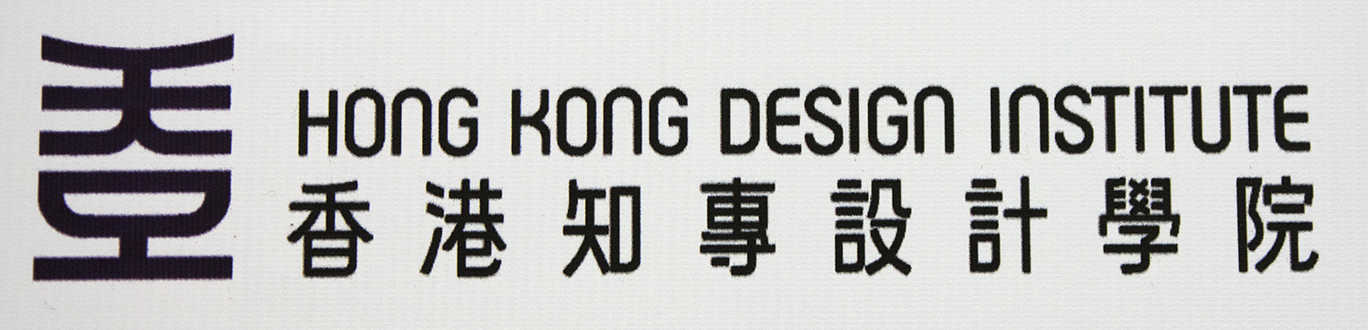
HKDI LOGO

HKDI, as it’s known to those who attend, offers courses in video production, animation, graphic design, photography, and much more in the fields of the visual and practical arts. It was in the Institute’s large auditorium that we held the ICC Symposium this week.

Being an instructor of things graphic, and a student of logo design, among other topics, the HKDI log caught my eye. It appears to be a single Chinese ideograph, with the words of the Institute adjacent to that character in English. The font appears to be Circula Bold (though I may not have identified it correctly). Under the lettering are eight additional Chinese characters, the meaning of these I do not know (I will post their translation here later).

HKDI Logo 02

What really impresses me about this logo is the way the letters HDKI are turned on their sides and make a readable Chinese ideograph. That symbol, I was told while there, is actually two Chinese ideographs, the one on the bottom meaning “from the ground up” and the one on the top meaning “to the sky.” So, the combined approximate translation of the Chinese is “from the ground to the sky.” That translation is very meaningful in Chinese, and the same symbols make up the letters HKDI.

The logo is the work of Danish graphic designer Karsten Skjoldhoej, whose design firm is called designmind.

This is the kind of work that makes a visual difference; its thoughtful graphic quality and its visual double entent are very appealing.

Posted in Art, Education, People | Tagged , , , | Leave a comment

Driving on the leftright in China

This was written in flight from Hong Kong to San Francisco

Blognosticator Head

When we traveled to mainland China yesterday in the charter bus, we enjoyed the countryside, surprisingly nice roads, and views out of the windows of tall apartment buildings, large factories and small workshops along the roadside.

I sat in the front of the bus to be able to look out the windshield, see highway signs, and to observe the flow of traffic. I was fascinated.

Highway signs in China

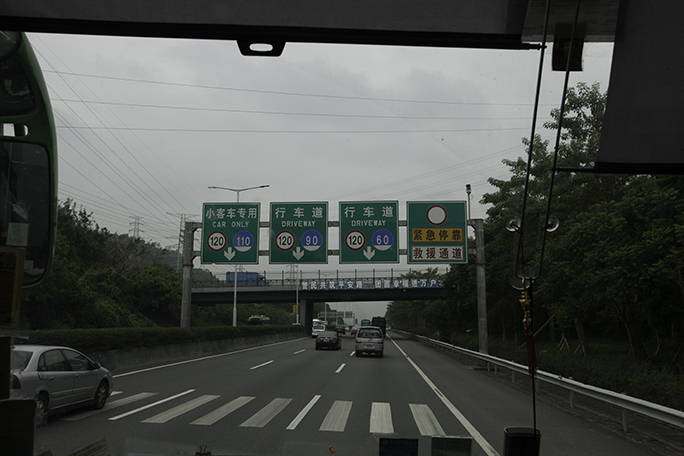
This is the view out the windshield of our bus in mainland China yesterday. I have no idea what the Chinese signs say, but the English is set in the correct font (ISO Highway Bold).

Cars were in good condition, a sign of careful driving. There were almost no dented cars or cars that showed any signs of collisions. And though our bus driver was quite aggressive, his driving never worried me or caused much of a commotion on the highway. Once in a while someone would toot their horn at us as we changed lanes or attempted a turn off.

In Hong Kong, a former British colony, they drive on the left, steer from the right. This has always been so. In China they drive on the right, steer from the left. I don’t know if this is something new, or if it was always this way.

When you drive from Hong Kong to mainland China you have to switch sides of the road, and this was fascinating to watch. Our driver was ambidriverous; he could drive just as skillfully on either side of the road. I have driven on the left in England a few times, and I find it frightening because I am usually the one making the mistake of lanes.

We had moments of difficulty at the toll plazas. Close to the Hong Kong border there were some lanes with toll-takers (or machines) on the right, and some with the toll-takers on the left. Our driver moved into the appropriate lane for the correct toll-taker, and we didn’t miss a beat. On the return trip we passed along several toll roads well inside China, and the driver occasionally had to stop the bus, get out of his seat, walk across the coach, then negotiate the toll or the ticket through a small porthole in the middle of the left door.

The governments of Hong Kong and China figured out how to switch the side of the road in the middle of the customs area, delivering vehicles over elevated roadways into the correct lanes for the approaching border. It’s essentially a big criss-cross of over- and-underpasses. When you drive out the other end you’re on the opposite side of the road. The trick, I am sure, is remembering which lane to turn into.

Our driver maneuvered this perfectly, and brought us back safely to our point of origin. Overall it was a great experience.


Posted in Adventures | Tagged , , | Leave a comment

China, day four-point-three

Blognosticator Head

We awoke yesterday and boarded a big green bus, heading north from Hong Kong into mainland China. Our objective was to visit three of China’s largest commercial printing companies, each known for quality and high volume.

Crossing the border from Hong Kong, which is treated almost like a separate country by China, is a curious affair. First, we left the bus, carrying our personal belongings, and we “left” Hong Kong through their customs station. Then we walked about 100 yards into the buffer zone between the two regions, and reboarded our bus.

After crossing the river that separates the regions at this point along the border, we entered mainland China, where we descended from the bus again, carrying our personal belongings, and “entered” China proper. It’s all very serious stuff, and I had to have a visa to make the trip. The visa was applied for, and acquired, in early October back in the U.S.

Once through Chinese customs you are warned “No Lingering” and “No refluence.” And, of course there is no photography allowed at this tactical location. Violators are punished by five years in jail, according to the signs.

At one point there was an X-ray machine, against which there was a sign indicating that “Baggages must be scanned.” I put my heavy camera case into the machine (“Film Safe!!”) and it came out the other end. As far as I could tell, no one was manning the machine. The other odd thing about this was that most of the locals walked right past the machine with their “baggages,” ignoring it altogether.

Lucky I didn’t refluence.

Once in China, we met up with our bus again, and proceeded north into Dongguan Province to visit the printing plants. The first was Hung Hing Printing Group Limited, the largest printer in the region (perhaps in the country). Located in Shenzhen, they employ 12,000 people at four plants in China. At the plant we visited they showed us their very impressive “showroom” which looks like a book store with toy boxes and movie point-of-purchase displays. In this room are thousands of samples of jobs the company has printed. They do nice work, and I am confident that I have more than a few books in my home library that were printed there.

Mitsubishi 65 inch Hung Hing

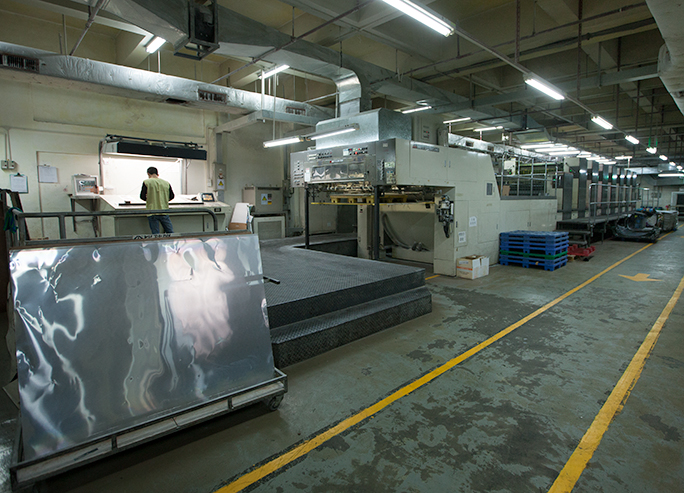
This is a Mitsubishi printing press at Hung Hing Printing in Shenzhen, China. The thing on the left is a 65-inch printing plate, evidence of the size of this behemoth. We saw several presses on this journey in sizes greater than the common 40-inch size.

Hung Hing’s Chairman, Matthew Yum, led our tour, and took us into the pressroom and the prepress area of the company. We saw about 25 sheet-fed presses there, mostly Heidelberg machines, and all 40 inches or greater in size. The pressroom was packed with presses in rows, punctuated by hallways for the delivery and removal of skids of printing paper.

Hung Hing also produces large-scale corrugated boxes, litho-laminate cartons, and many product containers printed first by lithography, then finished into folding boxes of various degrees of complexity. I was told that in the adjacent building were 6,000 employees doing hand finishing work.

Our cadre of color experts was interested in seeing the prepress area, so Mr. Yum led us to see the rows of platesetters, stacks of boxes of plates, and the workers making several thousand printing plates each and every day.

This was one of two plants we visited where I saw super-size platesetters, those capable of making 65-inch to 72-inch plates for the largest offset presses. The prepress manager explained how the company handles color, and how they make proofs and get customer approvals.

Hung Hing group photo

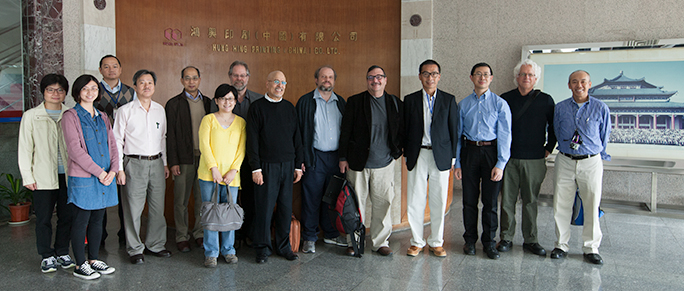
Our group in the lobby of Hung Hing’s printing plant in Shenzhen, China. This is probably the largest printer in the country.

After the Hung Hing experience, we drove for about 30 minutes to have lunch at a posh hotel in the area. There we were met by the CEO of our next plant, Mr. Peter Tse, who operates the family-owned China Translation and Printing Services company in the Dalang community of the province. Tse is a controversial figure in the Hong Kong printing group. The affable and very bright young man has made waves by installing two of the huge Hewlett-Packard web-fed ink-jet presses in his plant.

Everyone in the printing community knows about this installation, and they are all waiting to see what happens. Will Mr. Tse succeed with ink-jet printing? Will he gain market share with these unique machines? (They are two of three installed in Asia to date.)

Lunch with Peter Tse

Peter Tse, second from left, talks about the printing industry in China, and about his installation of two large scale HP ink-jet web presses at his plant in the Dalang community of Dongguan Province.

Over lunch, Mr. Tse explained to the group about Hong Kong and southern China’s economy, labor rates, living standards, and the pressures put on companies like his to raise the standard of living for the work force in his charge. Tse employs about 800 workers in his plants, and like the other firms we visited, provides housing and meals for those who run his factories.

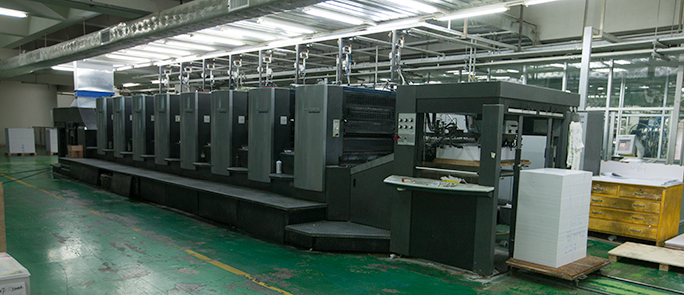
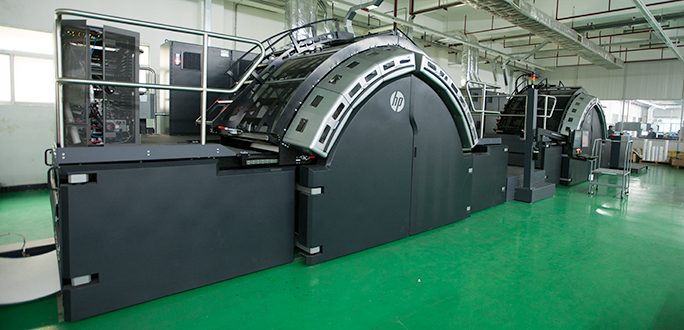
After lunch we saw the plant, with its 25 mostly Heidelberg presses on the ground floor, packed like cordwood in tight rows. Workers pushed skids of paper along the aisles to the presses, which were generating literal tons of printing while we watched. At the end of the offset pressroom we walked through a corridor filled with waiting paper and jobs being shipped out, and we entered a large area cordoned off by clean-room curtains. A large electric door rolled up quickly as we approached, and we entered Mr. Tse’s digital headquarters. Here we saw the behemoth HP M-410 ink-jet web press, standing in a brightly lit room, waiting for a job to be processed.

CTPS Heidelberg 8-color

This is one of 25 sheet-fed presses at China Translation and Printing Services. Note the ink-feed piping over each unit. All of the presses are connected to continuous-feed ink supplies.

In the adjacent room is the second HP ink-jet web press, a smaller 210 model, with a complete inline bindery system built into the large work room. On one end goes a roll of paper; out the other end come finished, perfect-bound books. The machine was running the entire time we were there, producing a paperback book for a publisher in Michigan, USA.

HP M410 web ink-jet press 03

This is the larger of the two Hewlett-Packard ink-jet web presses installed at China Translation and Printing Services. This is the M-410, a 40-inch model. In the adjacent room is the narrower model 201 press, combined with inline binding and finishing equipment.

And, along the wall of the same room is a third HP press, a roll-fed Indigo pair of presses printing from a roll of paper, then feeding directly into a Hunkeler cutter-collator-binder, which was kicking out stacked, collated booklets on uncoated stock.

This machinery is truly revolutionary in our industry. The only consumables are ink and paper (and the occasional replacement of an Edgeline print head), and the products are clean, crisp printing done on a machine that creates essentially no waste (except the trimmings from the perfect binder). There is no make-ready, no dumpster for the over-runs, and the entire facility is kept extraordinarily clean.

I have seen the future here.

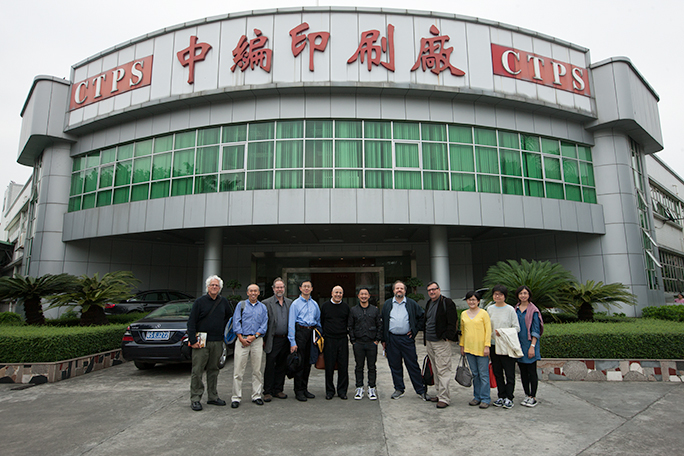
Group photo at CTPS

Outside China Translation and Printing Services in Dalang, Dongguan, China.

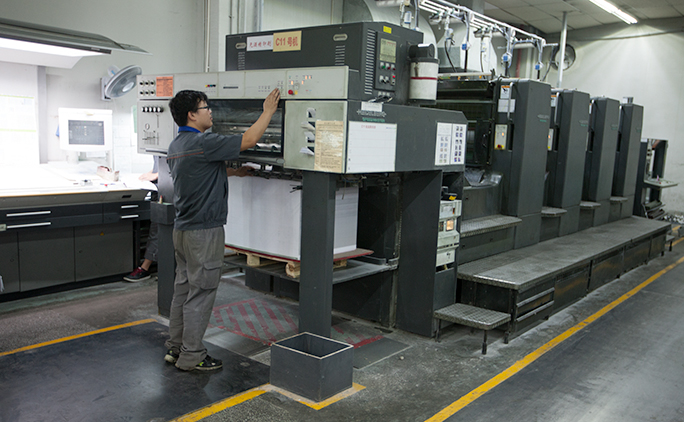
Our third stop was at Golden Cup Printing Company, located just 30 minutes away. Golden Cup is another very large printing plant that employs nearly 1,000 people. It also has Heidelberg presses lined up in rows in its cavernous press room. On the floor are steel plate runways for the paper palettes (I never saw a forklift on this trip).

Heidelberg press Golden Cup

One of Golden Cup’s 25 sheet-fed presses. Notice the steel plate flooring where the skids are run. These plates line the floor of the entire pressroom.

The presses turn out gorgeous full color printing for books that end up in Europe and America, mostly. Again, a large-scale platesetter generates plates for oversize sheet-fed presses, and the company makes thousands of plates every day. Golden Cup was the only printer on our week-long tour that uses Toray waterless plates on several of their Heidelberg presses. These plates allow for waterless printing, with potentially sharper halftone dots.

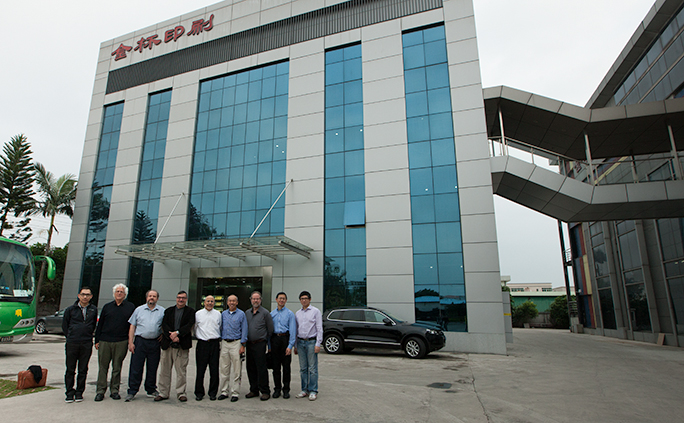
After the tour we stood for our third group photo of the day, proudly posing in front of the company’s beautiful new building that houses their administration offices, planning department and reception. On the top floor they have a large assembly hall for the employees to use for dances and musical entertainment events.

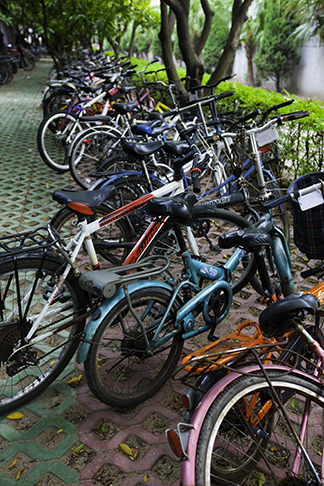
Bicycles at Golden Cup

Workers park hundreds of bicycles outside the pressroom at Golden Cup Printing.

I was impressed by the hundreds of colorful bicycles lined up outside the Golden Cup press room. Co-owner Albert Yeung told me that some of the company’s employees prefer not to live in company supplied dorms, and to live in private apartments nearby. The bicycles are their commuting vehicles.

Group Photo at Golden Cup

Our group poses outside Golden Cup Printing company. Their beautiful new building houses administration and an area for the employees to socialize.

We ended our day by traversing back into Hong Kong, and repeating the customs/immigration process again in reverse, arriving exhausted at our hotel in the evening. It was a day filled with about 75 sheet-fed printing machines, tens of thousands of printing plates, and a handful of new friendships that will last a lifetime.

I hope to refluence to this part of the world someday soon.

Posted in Adventures, Bookbinding, Business, Color Management, People, Printing and Printing Processes, Technology | Tagged , , , , , , , | Leave a comment

Hong Kong, Day three-point-seven

Blognosticator Head

I think.

Yesterday was the ICC Symposium at the Hong Kong Design Institute. We were expecting about 450 participants, and over 700 attended. The large auditorium at the center was filled, and they stayed all the way to the end. We were nearly overwhelmed by the success of the event.

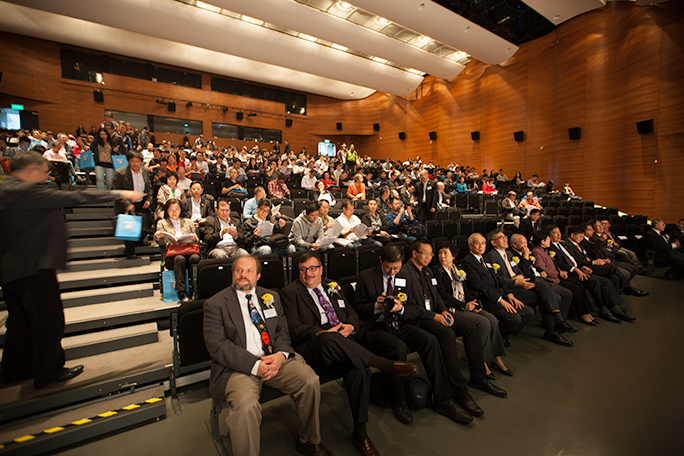
HKDI Auditorium full

This was the scene as the auditorium filled before the ICC Symposium. Eventually the entire hall was filled by printers, designers, students and members of the graphic arts community of Hong Kong.

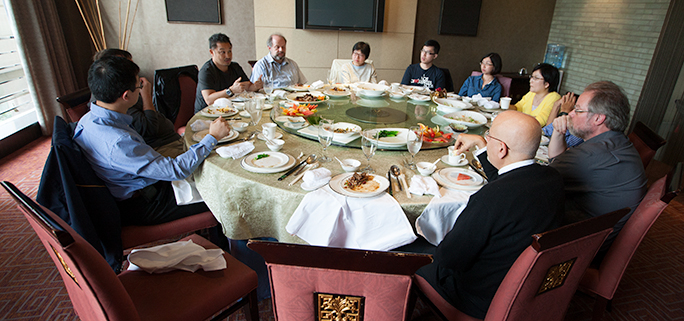
On Tuesday we rehearsed our program, and toured the PROAct printing training center and the Advanced Printing Technology Center, both organizations which were involved in hosting the symposium. Each of these events was punctuated by a huge meal with a lazy Susan in the center of the table, and a seemingly endless supply of specialty dishes being brought and consumed by the group.

Wednesday morning arrived pretty early, and we all shuttled over to the HKDI for our live presentation. Members of the Kong Kong government attended, the Director of the Hong Kong Printers Association gave the introductory speech, then we each stepped up to make our presentations to the audience.

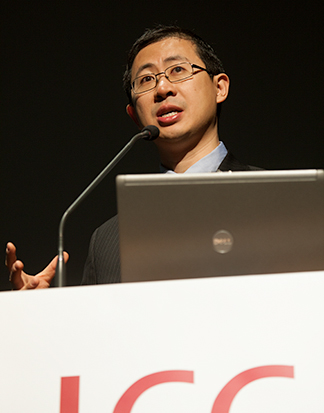
William Li at podium

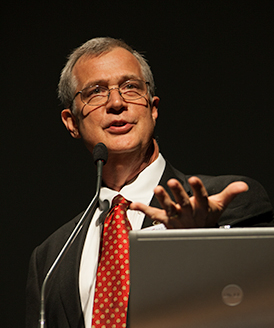
William Li of Kodak is the co-chair of the ICC. He gave an introductory talk about the organization and its mission, then talked about color management of hybrid process work flows.

ICC is the International Color Consortium, the group that brings us color management technology, profile specifications, and instrumentation guidance. The group was founded in 1993 by a small number of companies interested in establishing a scientific approach to managing color in computing, printing and publishing. The non-profit, non-partisan organization continues to this day to provide the science and math behind color management, and they continue to advance the state of the art with regard to color.

The presenters included William Li, representing the ICC and Kodak; Ragy Isaac of Goss; John Seymour of Quad Graphics; Tom Lianza representing the ICC, X-Rite, and his new company SequelCsi; Max Derhak representing the ICC and Onyx; and Kim Lam, representing Time, Inc., and his new work flow company Evergreen Kinetics; and Steve Smiley representing his company, SmileyColor. I was the moderator, representing Cal Poly and the graphic arts community.

Steve Smiley speaks

Steve Smiley made a presentation about the importance of color in brand management and package printing. His visuals showed how a job printed badly, or without regard to color management can cause the consumer to choose a competing product.

The topics were focused and impressive. Isaac and Seymour described how to measure the basic behavior of a printing press, and how to characterize its readiness to be profiled. Steve Smiley spoke about brand management of printed products, and the importance of color in consumer packaging.

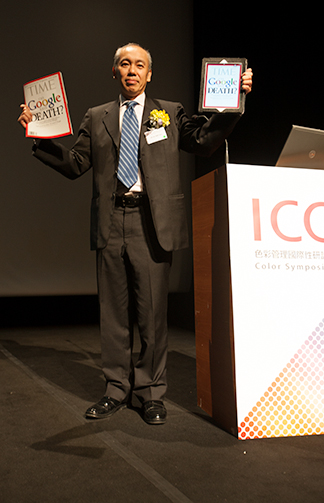
After a question and answer session we took a lunch break, then the afternoon was begun with a presentation about color management and photography by Tom Lianza. He was followed by a discussion of the current and future developments of ICC-Labs, and the work being done by the Consortium to move color management forward. Kin Lam then described how he and his team at Time Magazine took Time to the iPad. He described the difficulty of getting the electronic versions of the magazine published in tablet formats, and of the process they used to make the online version of Time a success.

Kin with iPad and magazine

Kin Lam presented his work with Time Magazine in moving the printed edition to a tablet edition. Here he holds the same edition of Time in print and on the Apple iPad.

Another question and answer session completed the symposium, and then we went out for another sumptuous Chinese dinner that lasted hours and involved a whole lot of foods on the lazy Susan, again. It was spectacular.

Lunch with ICC

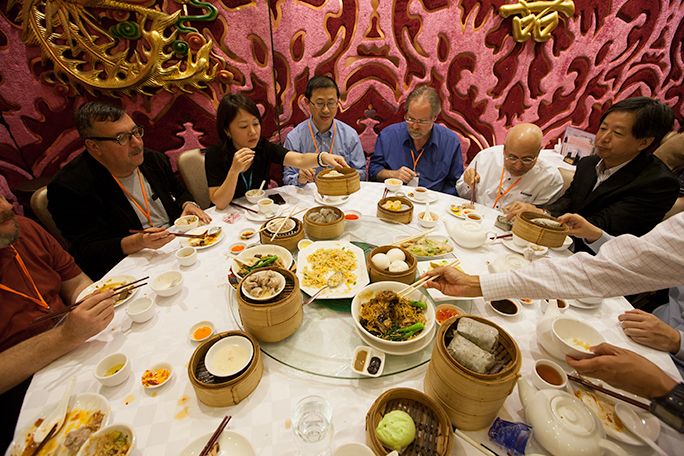
Dim Sum, and many (many!) fungi were brought to our table for lunch on rehearsal day. This was a tradition we kept running until late last night. And, I suspect we will repeat it again tonight after our printing plant tours. Cheers!

Today we are headed into Mainland China to tour three printing plants. I will report back after the day’s adventures about what I see and what I learn.

Posted in Adventures, Color Management, People, Photography, Photoshop techniques, Printing and Printing Processes, Software, Technology | Tagged , , , , , , , , , , , | 1 Comment

ePrint is setting records in Hong Kong printing community

Blognosticator Head

It’s VistaPrint for Hong Kong.

But less aggressive and irritating.

On our tours yesterday of printing plants in Hong Kong, we visited a company called ePrint, which is a largely web-based commercial printing company. They specialize in – everything. Their presses range from A3-size Indigo to 40-inch Heidelberg. They have saddle-stitching, perfect binding, and Smyth sewing equipment. I saw four large JDF-enabled Polar paper cutters, at least three Trendestter Magnum platesetters and processors, two 53 cm. Heidelberg Anicolor presses, and one Kodak Nexpress.

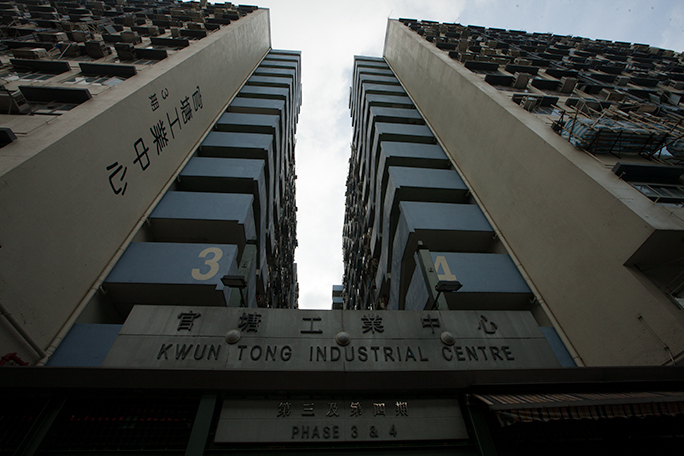
Kwun Tong Industrial Centre

This 17-story building is home to ePrint, and to ten other printing companies. It’s a beehive of activity with banks of freight elevators moving skids of paper up to the printing facilities in the building, and bustling with customers on the ground floor.

The company is located in 40 rooms of a 17-story printing enterprise building in eastern Kowloon. They share the building with numerous other printers and a variety of other trade manufacturers. The reason that they occupy these odd spaces on different floors of different wings of the building is that they grow and take space when it become available. The building is a warren of hallways and spaces, supported by a bank of industrial elevators that bring skids of paper up and down for the businesses in the building.

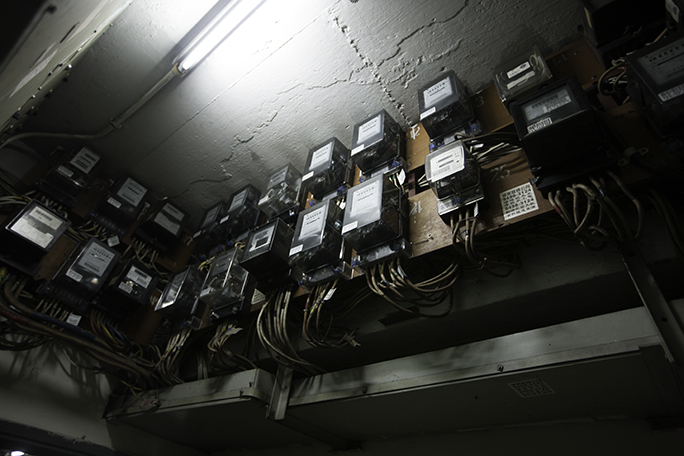
Watthour meters

These are watt-hour meters for 22 of the building’s occupant companies. The meters are located over the landing of a stairway in the building. While we were visiting yesterday, there was a technician stringing fiber-optic cable through a raceway in the hall, bringing ultra-high speed communication to one of the tenants.

Efficiency is the watchword for ePrint. They have a score of local retail storefronts where people can walk in an order printing. It’s possible, for example, to order ten sheets of printing from the company for delivery in two days. More common items like photo books, business booklets, posters, menus, posters and standard-size items, can be delivered in less time.

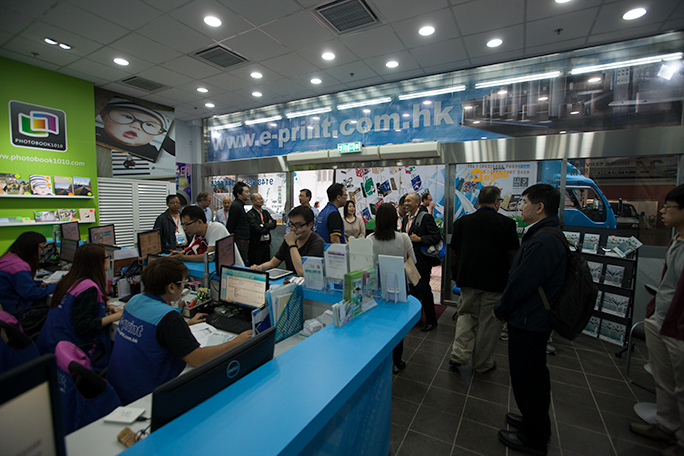
ePrint sales area

This is the ePrint sales area on the ground floor of the building. In addition to the ICC representatives visiting, the company had a number of retail customers working with customer service people at the counter. Around the well-lighted room were many samples of the work produced by the company. 

Everything they print is done with CMYK colors. Spot-color jobs are jobbed-out to a partner company. Everything they print is color-managed and tested for quality. They have an impressive control room where jobs come in via the Internet, and are dispatched to the various production work flows they have developed in-house.

The company makes about 1,000 offset plates every day on their Trendsetter Magnums. The firm’s staff of about 400 people are located in clusters where prepress is done, where platemaking is done, and where binding is done. The digital presses and the cutters are located together, while the offset presses are scattered around the 40-year-old building where space is available for them.

Jim explains color mgmt

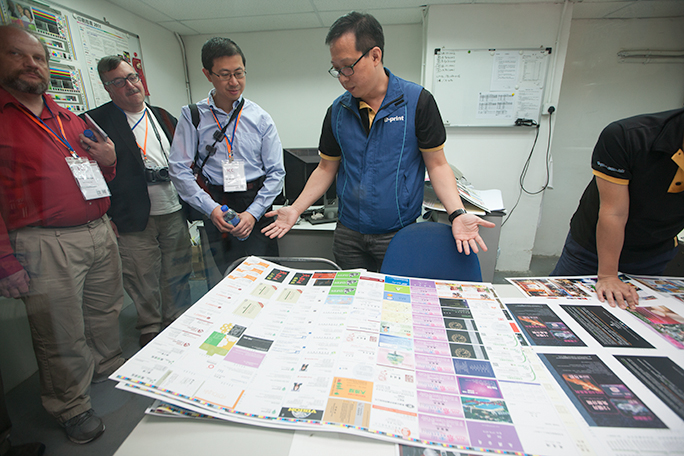
Jim, ePrint’s color management supervisor, explains his systems to William Li of the ICC committee, and a representative of Kodak in Burnaby, British Columbia. Jim impressed us with his knowledge and abilities in managing color for a very complex printing operation that runs 24 hours every day.

The retail outlet on the ground floor of the building was abuzz with customers dropping off files for production. Customer service representatives sit along a long counter, opposite their customers, and work with them to take orders and to arrange for printing, binding and delivery.

While many of their counterpart printing firms have left the urban Hong Kong center and moved their plants to mainland China, ePrint has made the decision to stay in town and provide customer-centered printing with short turn-around and low prices.

It’s an amazing place, and unlike any plant I have ever visited.

Posted in Adventures, Bookbinding, Business, Color Management, People, Printing and Printing Processes | Tagged , , , , , | 1 Comment

Hong Kong Day Two

Blognosticator Head

On my outings on Sunday in Hong Kong I had a chance to take the Star Ferry across Victoria Harbor to Hong Kong Island where my friend John Seymour and I had lunch. The weather was tempestuous, and we watched sailboat racers in the channel for a while, impressed by their ability to navigate in the strong winds without capsizing.

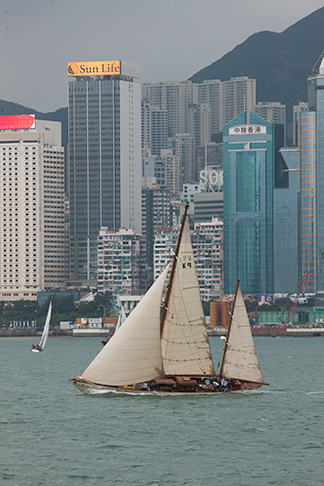
Sailboat

The ketch Rona, a wooden-hull sailboat, tacks in a stiff wind in Victoria Channel. In the background stand the high rise towers of Hong Kong Island.

The foul weather was a side effect of the terrible cyclone that hit the Philippines two days earlier. Though it rained a bit and strong winds blew in Hong Kong, the weather was nice enough; John and I enjoyed our outing.

I stopped along the southernmost tip of Kowloon to make a hand-held panorama with my iPhone, and then I took one with my Canon DSLR. I have my GigaPan rig with me, but the weather needs to get a little better before I will commit to making a GigaPan photo here.

Victoria Harbor pano 01

Hong Kong from Kowloon. It was a busy day in the harbor, with cruise ships, pleasure boats, sailboat races, and many commercial ferry boats plying the waters. Click on the image to see it at twice this resolution.

We finished the day with dinner with our hosts, the Advanced Printing Technology Centre (APTEC) and the International Color Consortium (ICC).

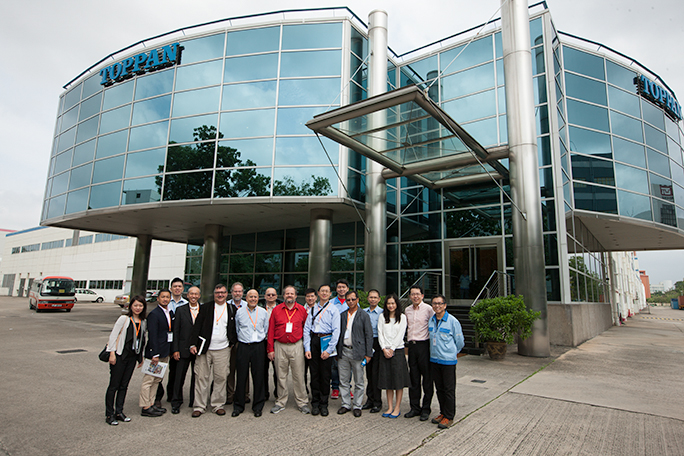
On Monday morning, the group headed out for two plant tours – the first of which was to Toppan Printing Company, Hong Kong. Toppan is the largest commercial printer in the region; they have the plant in Hong Kong, and two more in nearby provinces of Mainland China. In Hong Kong they produce scores of local magazines, commercial printing for the local community, and a large number of perfect bound and casebound books for North America.

Toppan Printing group

This is the ICC/APTEC group in front of Toppan’s beautiful Hong Kong printing plant. On the right end is Ben, the manager of prepress operations for the plant.

Toppan has five web presses – all Komoris, several sheet-fed presses – Mitsubishi and Heidelberg, and an impressive bindery with saddle-stitching, perfect-binding, and Smyth-sewn binding (case bound) equipment to handle nearly any type of finishing operation needed.

In the prepress department at Toppan we had a chance to meet the manager of that department, and to learn about the firm’s application of color management, quality control, and preflight. They make nearly 1,000 printing plates every day on a row of Kodak Magnum Trendsetters. They make scores of paper proofs on Epson and Hewlett-Packard wide format ink-jet printers, and three Xerox printers, all of them running with Kodak’s Prinergy work flow software.

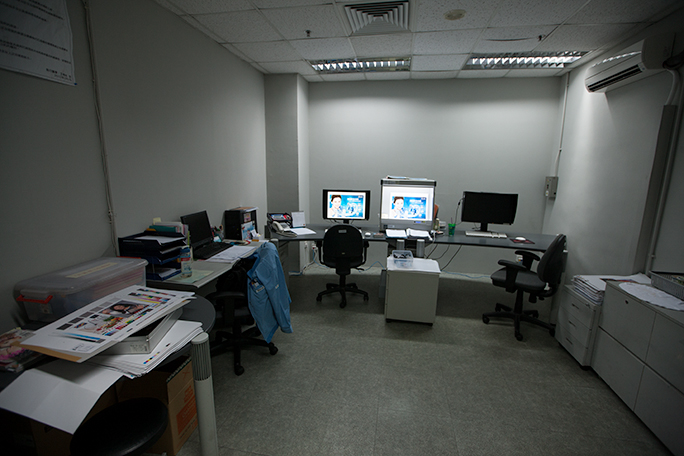
In the heart of the prepress department is the Color Lab, a room that conforms to ISO 3664, with neutral gray walls, floors, and counter tops. The room features two Macintosh computers, each with an Eizo LCD display, and a JUST Normlicht console viewing booth. In this room they can practice practical soft proofing, where their display and a printed page can be shown to appear the same. This is the second room of its type that I have ever seen, and the on-screen proof we saw today was amazingly accurate.

Toppan color room

Here, Ben explains how soft proofing is done in the Color Lab at Toppan Printing. Each of the two displays in the room can show a virtual color proof, and the booth in the center can be used for a comparison to the actual printing.

Color Room

The full view of the Color Lab at Toppan Printing.

I am teaching color management this quarter, and I have told my students about the ISO 3664 standard and about viewing rooms like this one. In both locations, despite more corporate-sounding names like “color lab,” the prepress managers referred to them as “the cave.” Though this room looks nothing like a cave, it is clear that spaces designed for accurate color viewing are not entirely pleasant work places. On the walls of the room was nothing other than the neutral paint. The rest of the plant was decorated with poster art from around the world. I find it ironic that the room where poster art is produced cannot have any on the walls, as such art would violate the room’s adherence to the specification.


Posted in Adventures, Bookbinding, Business, Color Management, Panoramic Photography, People, Photography, Scanning, Software | Tagged , , , , , , , | Leave a comment

Rolex? Rolex? Gucci? Tailor? Tailor?

Blognosticator Head

As I walked along the shopping street adjacent to my hotel in Hong Kong I was assailed by hawkers, all attempting to get me to go inside their shops to buy counterfeit Rolex watches, Gucci bags, and tailor’s services, I realized how much a white-haired Caucasian stands out in a crowd of primarily Chinese people. Did I have “American tourist” on a Post-It note on my forehead?

Nathan Street Mansion

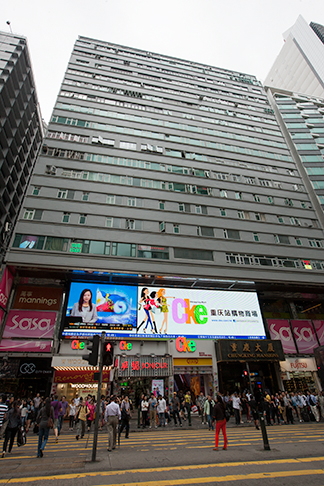
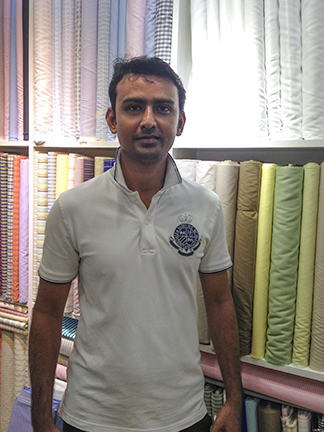
This is the Nathan Street Mansion, home to scores of small shops and home of my tailor, Khan Afsar and his colleague Abdul.

The first young man to thrust a tailor’s business card in my face was a fellow named Abdul Afsar, a native of Calcutta, who with his boss runs a small tailor’s shop on the third floor of a shopping center on Nathan Street in Kowloon. I took the bait.

In his shop, Abdul took my measurements for a new wool tuxedo, something I have wanted to buy for many years. I sing in various choruses throughout the year, and will be singing Handel’s Messiah in the Cuesta Master Chorale on the 23rd of this month (tickets are still available!). Thus, having a nice tuxedo is of real value to me. I have had two prior, one made of polyester that I bought from a catalog for performers, and it made me sweat profusely while I was in concerts. That was awful. The second I bought on the Internet, a moderately expensive wool suit from who-knows-where, but with an impressive Italian brand inside the collar. It was more confortable, but has never fit me well.

Abdul the Tailor

This is Abdul, assistant to Khan the Tailor. Abdul and I are now great friends.

This one will be made of real Cashmere wool, and it will fit me perfectly. I went in for my fitting this afternoon. The finished tux-opus will be ready for me tomorrow afternoon at Abdul’s shop. I am excited.

I learned that pretty much all the business suits sold in this neighborhood in Hong Kong come from one workshop, located in an adjacent building (called a “mansion” in local terminology) where seven workers cut and sew suits, shirts and trousers for white-haired Caucasian tourists who take the bait for the tailor shops along Nathan Street. I met one of those tailors today, a slender young man named Timmy who had me put on my suit (only one sleeve was there) while he put pins here and there, and smiled, and then took the unfinished suit and bolted out the door.

I’ll post a photo of myself in the suit when it’s finished.


Posted in Adventures, People | Tagged , , , , , | Leave a comment

Kalifornia to Kowloon for Kolor

Blognosticator Head

I’m in Hong Kong this week to attend the ICC conference. I composed this en route:

Kowloon via San Luis Obispo, San Jose and San Francisco
A melodrama in seven acts

I have been sitting in a nearly upright chair for the past 18 hours, a function of getting on a really big airplane and taking a really long flight. I just arrived in Hong Kong, and made my way very quickly from the airport to my hotel via high speed train and a free shuttle bus that ferried me directly to my destination.

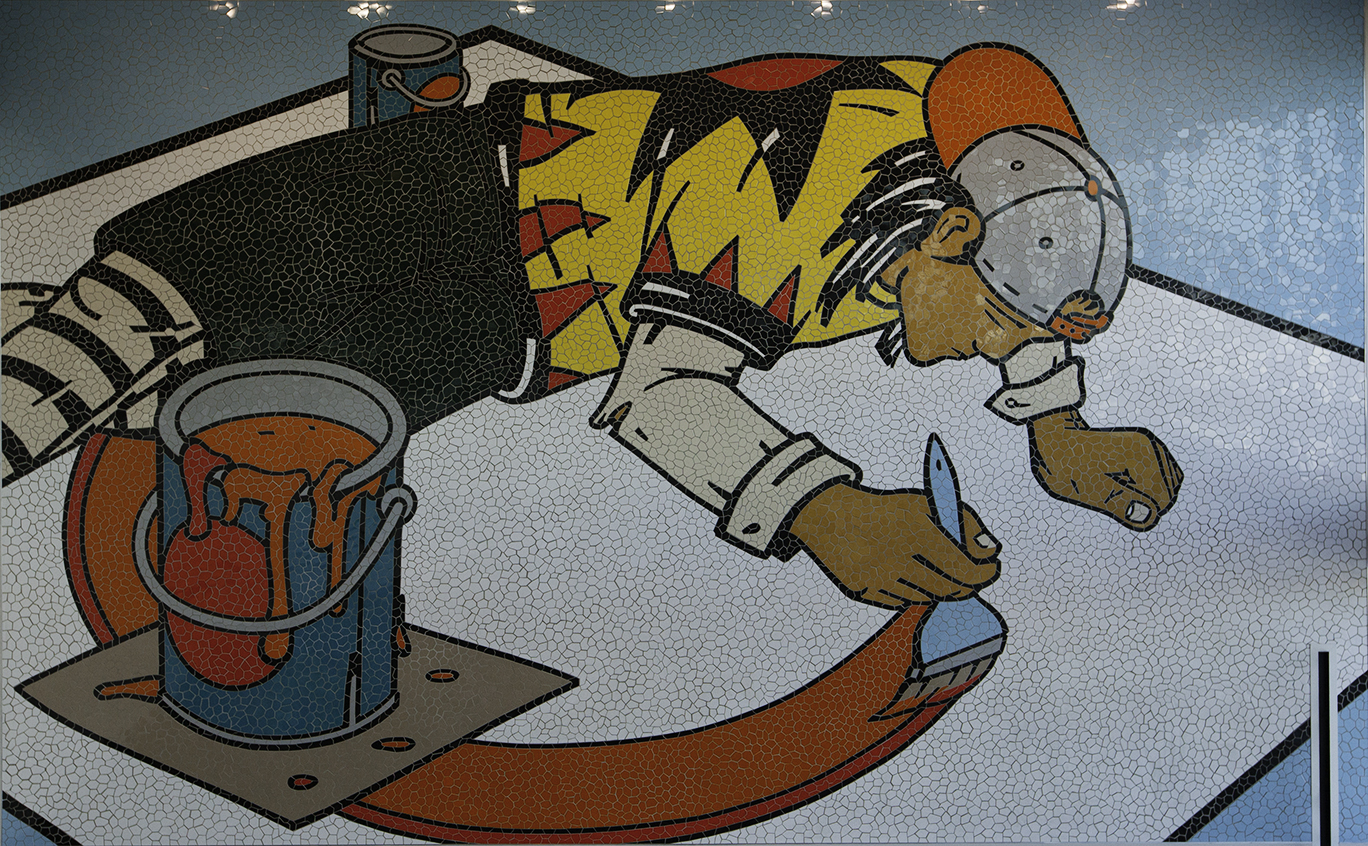
Rigo mosaic 1

This is a mosaic, nearly 50 feet across, in the boarding area of Gate 98 in the San Francisco International Airport. It is the work of an artist named Rigo. It is one of many pieces of fine art in the airport buildings. Click on the image to see it at twice this resolution

The train was beautiful, quiet, and very fast. The entire journey from the airport to my hotel took less than an hour, which is admirable for any big city. I doubt that ground transportation would have made it here so quickly.

The day started with a flight in a propeller plane, an Embraer EMB120 Brasilia, a 33-seat turboprop made in Brazil. These are the staple of SkyWest, which operates as a feeder airline under the name United Express. The flight to San Francisco usually takes just a hint over an hour, and you arrive at United’s terminal there with access to every destination in the world.

But San Francisco had a surprise for us yesterday morning: thick fog. We circled overhead for thirty minutes, then landed at San Jose airport at the southern tip of the San Francisco Bay. There, the passengers were treated to a push-me, pull-you vaudeville show involving air traffic controllers, United Airlines Operations, various baggage handlers, ground handlers, and, of course, the weather.

The pilot pulled up into a line of these Brasilia planes, all diverted to San Jose from various small cities in California: Chico, Redding, Crescent City, Arcata, Bakersfield. We were last to land there, so last in line to be refueled. The pilot shut down the engines, the flight attendant opened the door and lowered the stairs.

We were then told that the plane would be fueled, and then we would fly to San Francisco – a seven-minute trip. But then a baggage truck pulled up and took the baggage off our plane and drove away. The passengers were in a tizzy. The pilot then told us we would be taken by bus to the baggage claim area to retrieve our bags, then put on a bus to San Francisco airport – a 45-minute trip.

The fuel truck pulled up, the driver unreeled the hose, stood there for a moment, then reeled the hose back into the truck and drove away. I found this odd because no matter what the outcome of our situation the plane would need fuel. Then a second fuel truck drove up and unreeled his hose, stood there for a minute, but did not connect the hose to the plane’s wing.

The pilot announced that we would be boarding the bus to the terminal in just a moment.

Less than two minutes later, the pilot said, “Wait! United Operations has given us permission to fly to San Francisco, and the fog has cleared.” We in the passenger compartment cheered this announcement. Then the baggage truck returned with our baggage, and – I presumed – loaded it back into the plane.

The passengers were chatting about missed flights (almost everyone had rescheduled using their iPhones), missed meetings, and missed opportunities. We were all resigned to getting wherever we were going – late. I never worried though; I had originally had a four-hour layover. Surely my big bird would be standing on the tarmac when I arrived (it was).

The fuel truck operator sang an aria entitled “Jet-A j’taime!” from Verdi’s operetta “Tarmac.” Then he added fuel to the plane.

Then, in the most ironic scene of this melodrama, a man boarded our plane, lifted the microphone from the front wall and announced that we were going to be disembarking (thank goodness he didn’t use the non-word “de-planing”) and going by bus to San Francisco. There was a collective groan from his captive audience.

Moments later, after a tête-a-tête with the pilot and the very patient flight attendant, the pilot announced that this announcement was not up-to-date, and that United Operations had indeed instructed us to fly-on to San Francisco. We would be departing, he promised, in 11 minutes. And we did, and the flight really only lasted seven minutes, and we were in San Francisco less than 15 minutes later, inside the terminal. Hats off to that flight crew! (And we all gazed down at the buses transporting our comrades from Chico and Crescent City as we flew over them.)

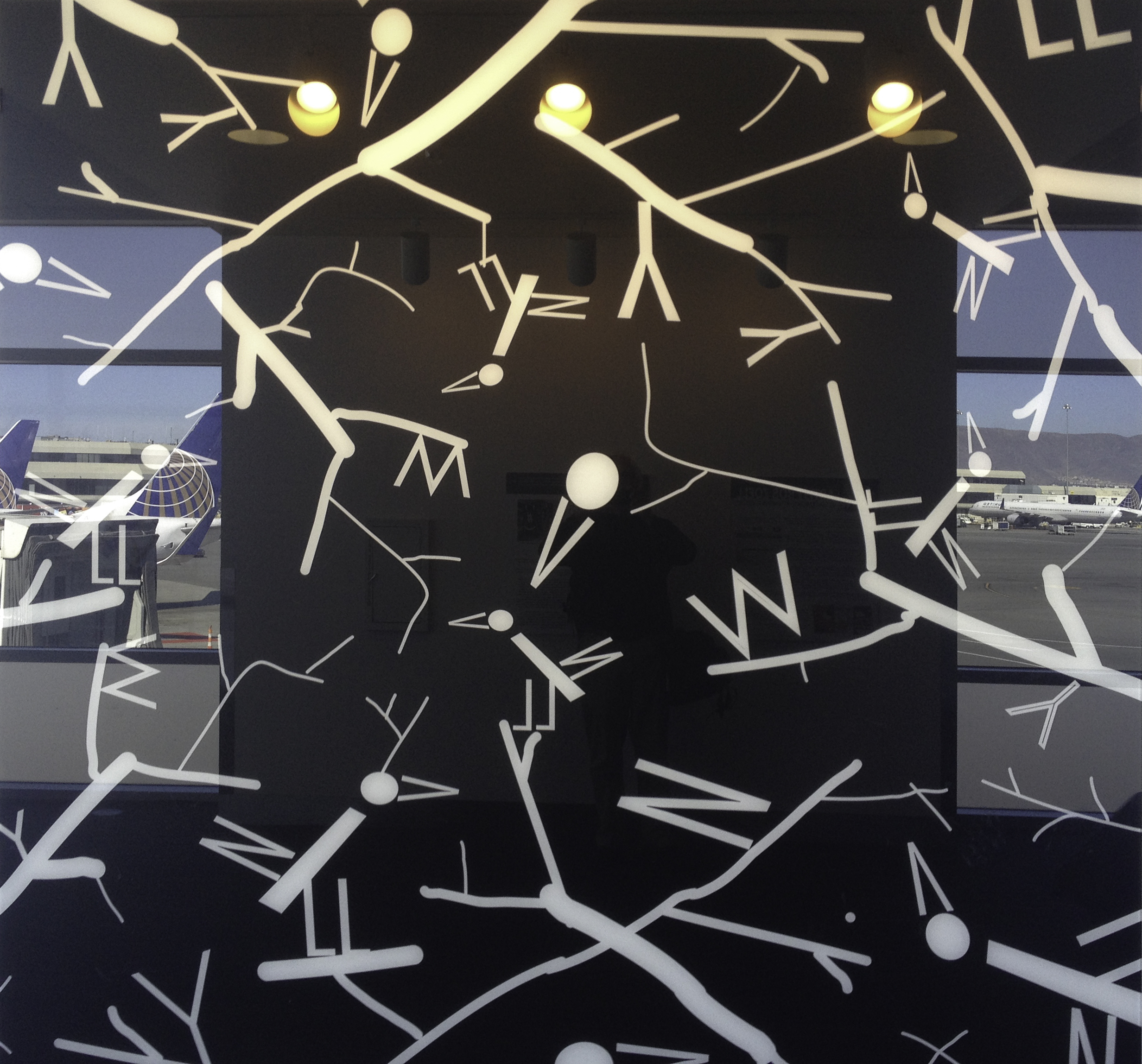
Zoell and window

Robert Zoell’s art in the glass of the International terminal at SFO: I loved the reflections of real airplanes combined with his typographic art depicting birds and airplanes. This is really nice work in an area where one does not expect fine art.

I had time to burn in San Francisco, so treated myself to a nice lunch and an unrushed walk to Gate 98 in the International terminal. Along the way I enjoyed the display of Japanese toys in the museum/concourse at United. The City of San Francisco runs the airport as an art museum, with ever-changing displays of art in the hallways, along the big United concourse, and a substantial permanent collection of art on the walls of the various terminal buildings.

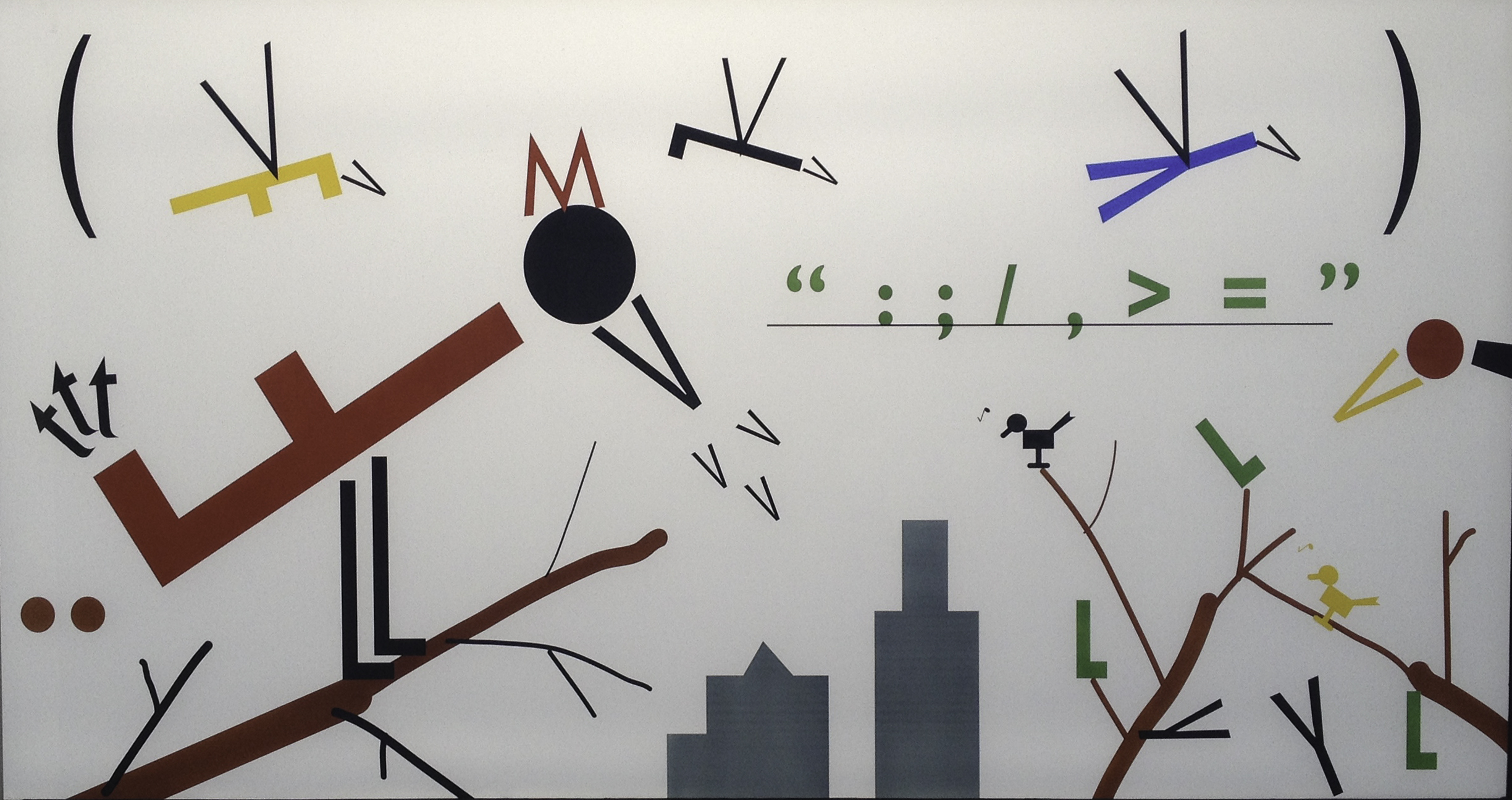
Zoell 1

This art, which is encased in the glass along the walls of a passageway between two United Airlines terminals, is the work of Canadian artist Robert Zoell. In his description of the art, called BFILRYD, he explains that it’s about birds and trees and airplanes. I was impressed that it is made up of letters.

In the hallway between buildings I noticed artwork that I have never seen before. It is graphic art by Canadian artist Robert Zoell featuring birds, airplanes and trees, most of the art composed of sans serif letters. Zoell went to work in his father’s printing company at the age of 12 (sounds familiar) where he set type and made litho plates (sounds familiar). He obviously became enamored of type at an early age, and carried that through to these delightful pieces in the glass at the San Francisco airport.

In the boarding area of the International building was a breathtaking mosaic by a Portuguese artist who goes by the name Rigo. This work, entitled Thinking of Balmy Alley, is about 50 feet in width, and made of broken ceramic tile. It was refreshing to see the quality of art, and the commitment made by the people of San Francisco to make the airport both a terminal for transportation and a gallery of really fine art.

Mosaic detail

This is a close-up of the detail of Rigo’s mosaic. Click on the image to see it at twice this resolution.


Posted in Adventures, Art, Color Management, Typography | Tagged , , , , , , , | Leave a comment

Making modern panoramic photos to match historic images

Blognosticator Head

I’m multitasking – working on installing solar panels on my roof, working with my students and colleagues, writing a book, working on another person’s book, doing illustrations for another book, singing in a choral group (concert on the 23rd!), preparing the copy for Cal Poly’s commencement ceremony next month, and keeping up with things around the house.

In my spare time I am preparing for a show at our local San Luis Obispo Museum of Art. This show will feature panoramic photos taken by me, one of which I plan to print 10 feet tall and over 58 feet in length. This print will be made in 17 sections on my Epson wide format ink-jet printer, then the output will be laminated with very thin clear film laminate. When it’s finished, John the Wallpaper Hanger will trim the strips (there is a one-inch overlap), and glue these sections to the wall. They will stay up for 45 days, after which John the Wallpaper Hanger will turn into John the Wallpaper Remover, and peel them off the wall. This will work because he will have prepared the wall with a lacquer-based paint that will resist a permanent bond with the wallpaper paste.

I hope this works.

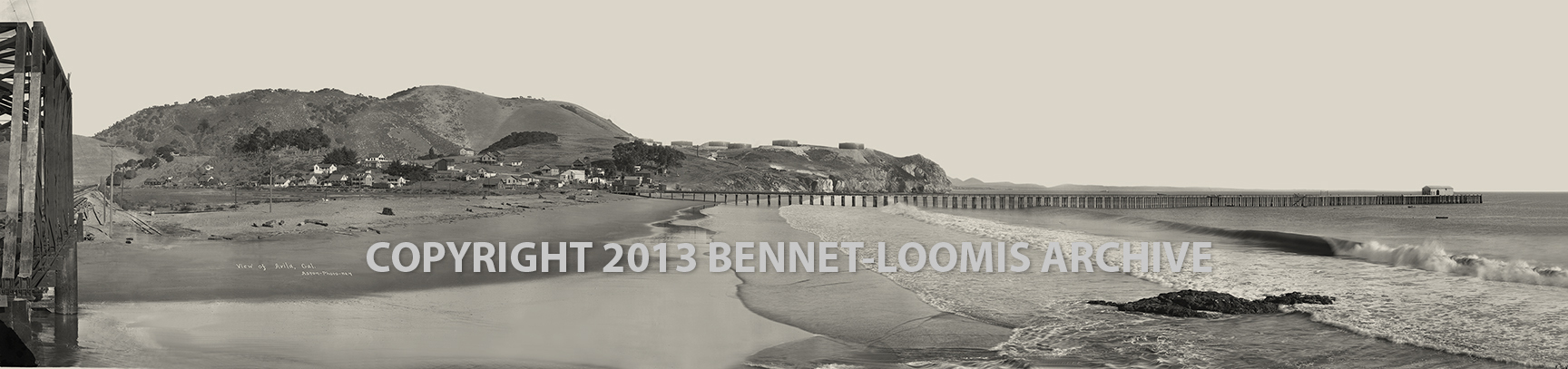
Meanwhile, back in my multitasking world, I have been taking GigaPan panoramas of locations around our community. These are photos of our town and of the region around us. Some of these are replicas of photos taken by a man named Frank Aston, who was a commercial photographer in San Luis Obispo between 1906 and 1947. A few weeks back I wrote in my blog about scanning the long Cirkut camera negatives taken by Mr. Aston. Since then I have identified a few of these images that I want to replicate with new photos, and I have been working on those to put on display in my show in February.

View of Avila Beach LR

This is the panorama taken by Frank Aston of Avila Beach, California, in the early 1900s. The sleepy beach town served as an oil transfer point for Union Oil Company; you can see their large oil tanks on the hills above the pier.

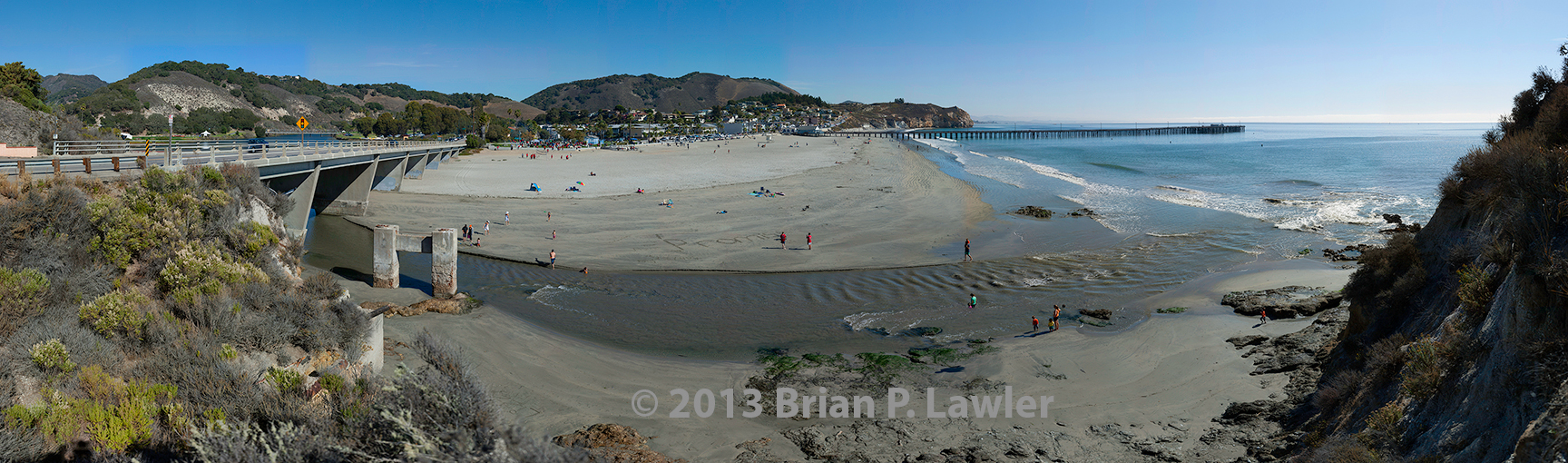
On Saturday I drove out to Avila Beach, a bucolic beach town a few miles from here, and took a replica photo based on an Aston panorama from the early 1900s. His photo was taken from a wooden railroad bridge that is no longer there. But, I was able to get to a spot about 50 feet from that place to make the new version. Where his image is in black and white, mine is in color, and where his was on film, mine is digital. I shot 312 images on my Canon 1ds Mark III with a 200mm telephoto lens. These stitched into a 9GB photo of the scene, which is very sharp and has a tremendous amount of detail.

Avila Beach Panorama LR

This is my GigaPan photo from last Saturday. At center-left you can see the concrete pilings that once held the railroad bridge featured on the left edge of the photo above. The oil tanks on the hills in the distance are gone, and the town is now a popular tourist destination, and a great swimming beach for locals. In the foreground is the mouth of San Luis Obispo Creek. The pier, and the building on the pier, are still here.

My plan for the photo show in February is to hang the historic photos immediately under the modern images. Some of my replica images will be a bit wider in coverage than the historic photos, yet they will convey the same visual impression as the originals.

I start printing the 17 ten-foot panels of my 58-foot photo tomorrow, and for that I am using a home made take-up reel on the floor in front of my printer. I want to handle the photo paper as little as possible to avoid kinking it as I handle it. After the prints are made, I will have them laminated by a commercial firm in town. The process of printing these will be about 20 hours of printer time, spread over a week or so in my home office.

On Friday I leave for Hong Kong for the International Color Consortium meeting there. I will be moderating one session of that conference, and will be attending various printing plant tours during the week. I hope to be able to get a GigaPan image from the top of the hill of the Hong Kong cityscape, so I will be taking the GigaPan rig and a big tripod with me on the trip. More on this later.


Posted in Adventures, Panoramic Photography, Photography, Printing and Printing Processes | Tagged , , , , , , , | Leave a comment